 Add to Chrome
 Add to Firefox
 Add to Edge
DimStance: Multilingual Datasets for Dimensional Stance Analysis
Jan 29, 2026
Stance detection is an established task that classifies an author's attitude toward a specific target into categories such as Favor, Neutral, and Against. Beyond categorical stance labels, we leverage a long-established affective science framework to model stance along real-valued dimensions of valence (negative-positive) and arousal (calm-active). This dimensional approach captures nuanced affective states underlying stance expressions, enabling fine-grained stance analysis. To this end, we introduce DimStance, the first dimensional stance resource with valence-arousal (VA) annotations. This resource comprises 11,746 target aspects in 7,365 texts across five languages (English, German, Chinese, Nigerian Pidgin, and Swahili) and two domains (politics and environmental protection). To facilitate the evaluation of stance VA prediction, we formulate the dimensional stance regression task, analyze cross-lingual VA patterns, and benchmark pretrained and large language models under regression and prompting settings. Results show competitive performance of fine-tuned LLM regressors, persistent challenges in low-resource languages, and limitations of token-based generation. DimStance provides a foundation for multilingual, emotion-aware, stance analysis and benchmarking.

CommonLID: Re-evaluating State-of-the-Art Language Identification Performance on Web Data
Jan 25, 2026Language identification (LID) is a fundamental step in curating multilingual corpora. However, LID models still perform poorly for many languages, especially on the noisy and heterogeneous web data often used to train multilingual language models. In this paper, we introduce CommonLID, a community-driven, human-annotated LID benchmark for the web domain, covering 109 languages. Many of the included languages have been previously under-served, making CommonLID a key resource for developing more representative high-quality text corpora. We show CommonLID's value by using it, alongside five other common evaluation sets, to test eight popular LID models. We analyse our results to situate our contribution and to provide an overview of the state of the art. In particular, we highlight that existing evaluations overestimate LID accuracy for many languages in the web domain. We make CommonLID and the code used to create it available under an open, permissive license.
Afri-MCQA: Multimodal Cultural Question Answering for African Languages
Jan 09, 2026Africa is home to over one-third of the world's languages, yet remains underrepresented in AI research. We introduce Afri-MCQA, the first Multilingual Cultural Question-Answering benchmark covering 7.5k Q&A pairs across 15 African languages from 12 countries. The benchmark offers parallel English-African language Q&A pairs across text and speech modalities and was entirely created by native speakers. Benchmarking large language models (LLMs) on Afri-MCQA shows that open-weight models perform poorly across evaluated cultures, with near-zero accuracy on open-ended VQA when queried in native language or speech. To evaluate linguistic competence, we include control experiments meant to assess this specific aspect separate from cultural knowledge, and we observe significant performance gaps between native languages and English for both text and speech. These findings underscore the need for speech-first approaches, culturally grounded pretraining, and cross-lingual cultural transfer. To support more inclusive multimodal AI development in African languages, we release our Afri-MCQA under academic license or CC BY-NC 4.0 on HuggingFace (https://huggingface.co/datasets/Atnafu/Afri-MCQA)
POLAR: A Benchmark for Multilingual, Multicultural, and Multi-Event Online Polarization
May 27, 2025Online polarization poses a growing challenge for democratic discourse, yet most computational social science research remains monolingual, culturally narrow, or event-specific. We introduce POLAR, a multilingual, multicultural, and multievent dataset with over 23k instances in seven languages from diverse online platforms and real-world events. Polarization is annotated along three axes: presence, type, and manifestation, using a variety of annotation platforms adapted to each cultural context. We conduct two main experiments: (1) we fine-tune six multilingual pretrained language models in both monolingual and cross-lingual setups; and (2) we evaluate a range of open and closed large language models (LLMs) in few-shot and zero-shot scenarios. Results show that while most models perform well on binary polarization detection, they achieve substantially lower scores when predicting polarization types and manifestations. These findings highlight the complex, highly contextual nature of polarization and the need for robust, adaptable approaches in NLP and computational social science. All resources will be released to support further research and effective mitigation of digital polarization globally.
HausaNLP: Current Status, Challenges and Future Directions for Hausa Natural Language Processing
May 20, 2025Hausa Natural Language Processing (NLP) has gained increasing attention in recent years, yet remains understudied as a low-resource language despite having over 120 million first-language (L1) and 80 million second-language (L2) speakers worldwide. While significant advances have been made in high-resource languages, Hausa NLP faces persistent challenges, including limited open-source datasets and inadequate model representation. This paper presents an overview of the current state of Hausa NLP, systematically examining existing resources, research contributions, and gaps across fundamental NLP tasks: text classification, machine translation, named entity recognition, speech recognition, and question answering. We introduce HausaNLP (https://catalog.hausanlp.org), a curated catalog that aggregates datasets, tools, and research works to enhance accessibility and drive further development. Furthermore, we discuss challenges in integrating Hausa into large language models (LLMs), addressing issues of suboptimal tokenization and dialectal variation. Finally, we propose strategic research directions emphasizing dataset expansion, improved language modeling approaches, and strengthened community collaboration to advance Hausa NLP. Our work provides both a foundation for accelerating Hausa NLP progress and valuable insights for broader multilingual NLP research.
Automatic Speech Recognition for African Low-Resource Languages: Challenges and Future Directions
May 16, 2025Automatic Speech Recognition (ASR) technologies have transformed human-computer interaction; however, low-resource languages in Africa remain significantly underrepresented in both research and practical applications. This study investigates the major challenges hindering the development of ASR systems for these languages, which include data scarcity, linguistic complexity, limited computational resources, acoustic variability, and ethical concerns surrounding bias and privacy. The primary goal is to critically analyze these barriers and identify practical, inclusive strategies to advance ASR technologies within the African context. Recent advances and case studies emphasize promising strategies such as community-driven data collection, self-supervised and multilingual learning, lightweight model architectures, and techniques that prioritize privacy. Evidence from pilot projects involving various African languages showcases the feasibility and impact of customized solutions, which encompass morpheme-based modeling and domain-specific ASR applications in sectors like healthcare and education. The findings highlight the importance of interdisciplinary collaboration and sustained investment to tackle the distinct linguistic and infrastructural challenges faced by the continent. This study offers a progressive roadmap for creating ethical, efficient, and inclusive ASR systems that not only safeguard linguistic diversity but also improve digital accessibility and promote socioeconomic participation for speakers of African languages.
HausaNLP at SemEval-2025 Task 3: Towards a Fine-Grained Model-Aware Hallucination Detection
Mar 25, 2025This paper presents our findings of the Multilingual Shared Task on Hallucinations and Related Observable Overgeneration Mistakes, MU-SHROOM, which focuses on identifying hallucinations and related overgeneration errors in large language models (LLMs). The shared task involves detecting specific text spans that constitute hallucinations in the outputs generated by LLMs in 14 languages. To address this task, we aim to provide a nuanced, model-aware understanding of hallucination occurrences and severity in English. We used natural language inference and fine-tuned a ModernBERT model using a synthetic dataset of 400 samples, achieving an Intersection over Union (IoU) score of 0.032 and a correlation score of 0.422. These results indicate a moderately positive correlation between the model's confidence scores and the actual presence of hallucinations. The IoU score indicates that our model has a relatively low overlap between the predicted hallucination span and the truth annotation. The performance is unsurprising, given the intricate nature of hallucination detection. Hallucinations often manifest subtly, relying on context, making pinpointing their exact boundaries formidable.
Exploring Cultural Nuances in Emotion Perception Across 15 African Languages
Mar 25, 2025Understanding how emotions are expressed across languages is vital for building culturally-aware and inclusive NLP systems. However, emotion expression in African languages is understudied, limiting the development of effective emotion detection tools in these languages. In this work, we present a cross-linguistic analysis of emotion expression in 15 African languages. We examine four key dimensions of emotion representation: text length, sentiment polarity, emotion co-occurrence, and intensity variations. Our findings reveal diverse language-specific patterns in emotional expression -- with Somali texts typically longer, while others like IsiZulu and Algerian Arabic show more concise emotional expression. We observe a higher prevalence of negative sentiment in several Nigerian languages compared to lower negativity in languages like IsiXhosa. Further, emotion co-occurrence analysis demonstrates strong cross-linguistic associations between specific emotion pairs (anger-disgust, sadness-fear), suggesting universal psychological connections. Intensity distributions show multimodal patterns with significant variations between language families; Bantu languages display similar yet distinct profiles, while Afroasiatic languages and Nigerian Pidgin demonstrate wider intensity ranges. These findings highlight the need for language-specific approaches to emotion detection while identifying opportunities for transfer learning across related languages.
HausaNLP at SemEval-2025 Task 2: Entity-Aware Fine-tuning vs. Prompt Engineering in Entity-Aware Machine Translation
Mar 25, 2025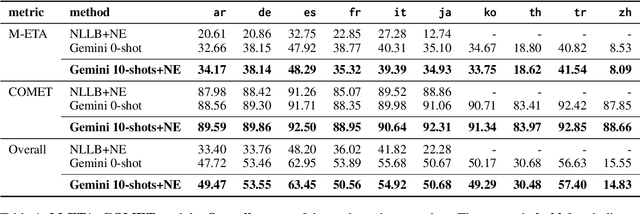
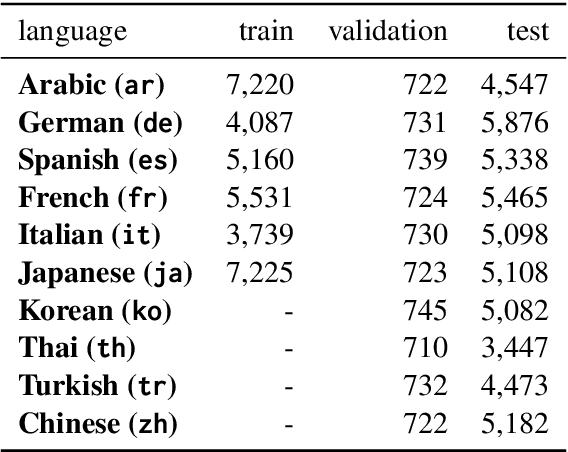
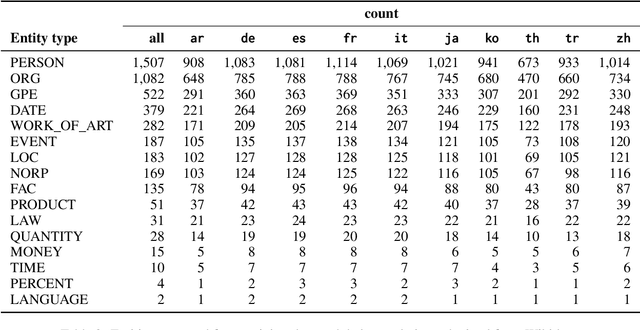
This paper presents our findings for SemEval 2025 Task 2, a shared task on entity-aware machine translation (EA-MT). The goal of this task is to develop translation models that can accurately translate English sentences into target languages, with a particular focus on handling named entities, which often pose challenges for MT systems. The task covers 10 target languages with English as the source. In this paper, we describe the different systems we employed, detail our results, and discuss insights gained from our experiments.
Who Wrote This? Identifying Machine vs Human-Generated Text in Hausa
Mar 17, 2025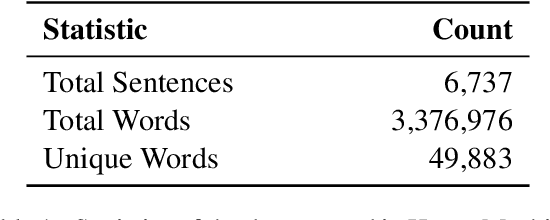
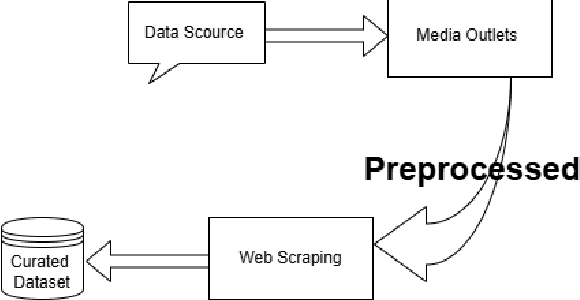
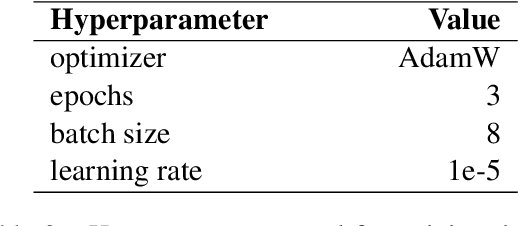
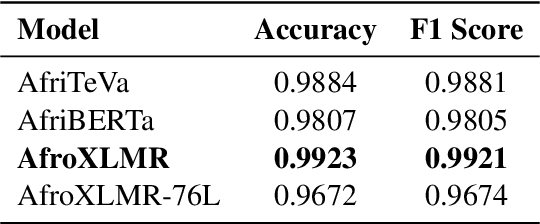
The advancement of large language models (LLMs) has allowed them to be proficient in various tasks, including content generation. However, their unregulated usage can lead to malicious activities such as plagiarism and generating and spreading fake news, especially for low-resource languages. Most existing machine-generated text detectors are trained on high-resource languages like English, French, etc. In this study, we developed the first large-scale detector that can distinguish between human- and machine-generated content in Hausa. We scrapped seven Hausa-language media outlets for the human-generated text and the Gemini-2.0 flash model to automatically generate the corresponding Hausa-language articles based on the human-generated article headlines. We fine-tuned four pre-trained Afri-centric models (AfriTeVa, AfriBERTa, AfroXLMR, and AfroXLMR-76L) on the resulting dataset and assessed their performance using accuracy and F1-score metrics. AfroXLMR achieved the highest performance with an accuracy of 99.23% and an F1 score of 99.21%, demonstrating its effectiveness for Hausa text detection. Our dataset is made publicly available to enable further research.